
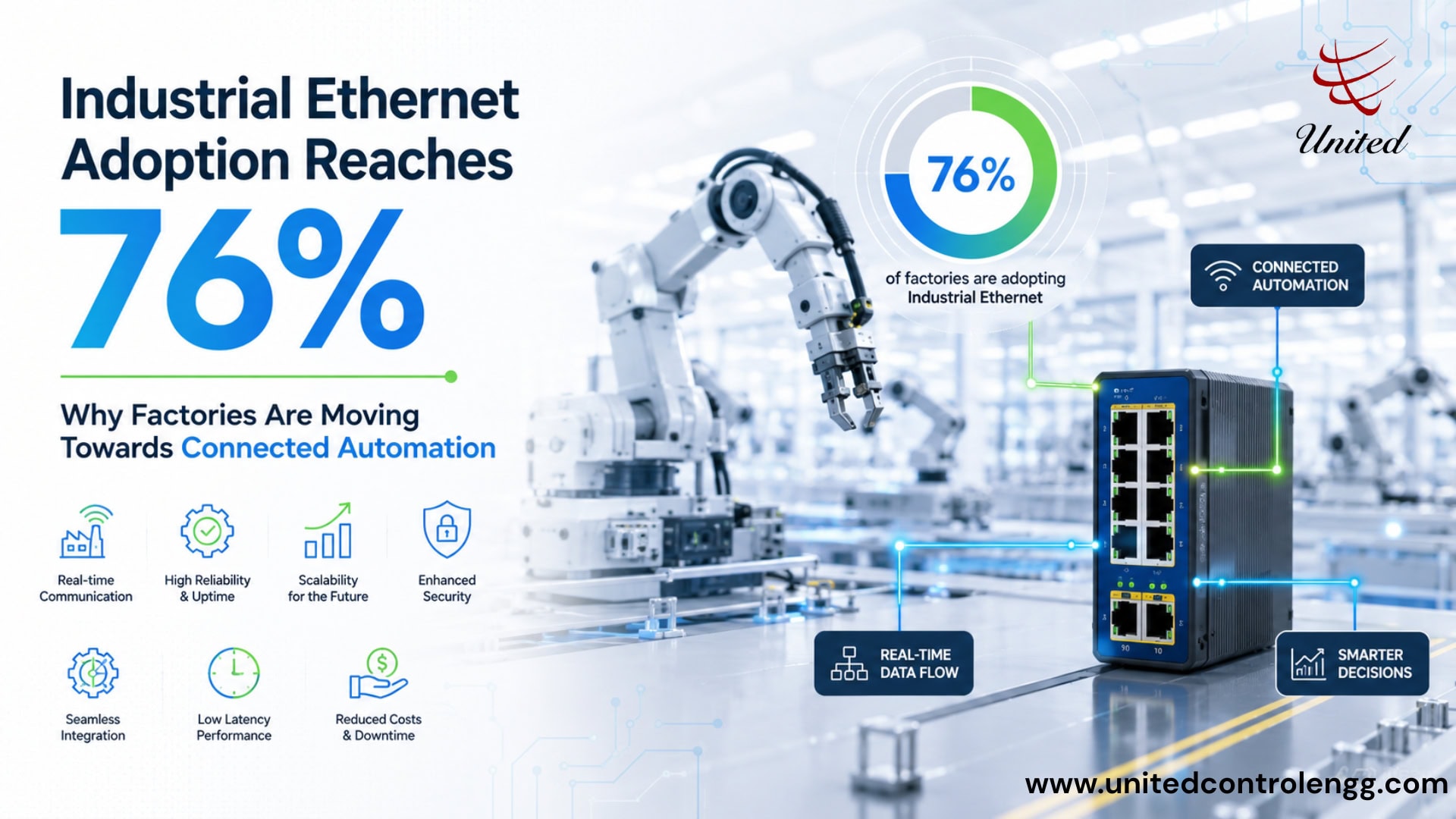
Connected Automation: How Industrial Ethernet Powers Smart Manufacturing
The manufacturing industry is evolving rapidly, and businesses are increasingly adopting Connected Automation to improve efficiency, visibility, and operational control. As industries move towards digital transformation and Industry 4.0, seamless communication between machines, controllers, and monitoring systems has become essential.At the center of this transformation is Industrial Ethernet, which enables real-time communication between PLCs, HMIs, Ethernet switches, industrial routers, and SCADA systems. As a result, organizations can reduce downtime, improve productivity, and make data-driven decisions faster than ever before.
What is Connected Automation?
Connected Automation refers to the integration of industrial devices, control systems, and communication networks that allow information to flow seamlessly across an entire facility. Unlike conventional automation systems that operate independently, modern connected environments enable machines and operators to exchange data continuously.
Consequently, businesses gain greater visibility into their operations while improving efficiency and responsiveness. Moreover, connected systems help organizations identify issues before they become costly failures.
Why Modern Industries Need Connected Automation
Today's industries face increasing pressure to maximize output while reducing operational costs. Therefore, implementing Connected Automation has become a strategic investment rather than a technological upgrade.
Key benefits include:
- Real-time monitoring of equipment and processes
- Faster fault detection and troubleshooting
- Reduced downtime and maintenance costs
- Improved production efficiency
- Enhanced operational visibility
- Remote access to critical systems
- Better decision-making through live data
In addition, connected industrial networks provide the flexibility required for future expansion and technology upgrades.
How Industrial Ethernet Enables Smart Operations
Industrial Ethernet serves as the communication backbone of modern manufacturing facilities. Unlike traditional communication methods, it offers reliable, high-speed, and scalable connectivity between industrial devices.
Furthermore, Industrial Ethernet supports seamless communication across different automation platforms, helping organizations build a unified operational environment.
It commonly connects:
- Programmable Logic Controllers (PLCs)
- Human Machine Interfaces (HMIs)
- Industrial Routers
- Ethernet Switches
- SCADA Systems
- Sensors and Remote I/O Devices
- Variable Frequency Drives (VFDs)
Because of its reliability and flexibility, Industrial Ethernet has become the preferred networking technology for smart industrial operations worldwide.
Real-World Application in Water Treatment Plants
A practical example of Connected Automation can be found in modern water treatment facilities, where multiple systems must communicate continuously to ensure uninterrupted operations.
Traditional Approach
- Operators perform manual inspections
- Fault diagnosis takes longer
- Limited process visibility
- Delayed maintenance response
- No remote access capabilities
Connected Approach
By implementing Connected Automation, facilities can integrate PLCs, HMIs, industrial routers, and Ethernet switches into a unified communication network.
- PLCs communicate with HMIs in real time
- Industrial routers enable secure remote monitoring
- Ethernet switches connect field devices efficiently
- SCADA systems provide centralized monitoring
- Instant alarms improve response times
As a result, engineers can quickly identify issues, minimize downtime, and maintain optimal plant performance.
Key Technologies Behind Connected Manufacturing
Several technologies work together to support modern industrial communication systems. Together, they create a robust foundation for connected manufacturing.
Programmable Logic Controllers (PLCs)
PLCs automate industrial processes while collecting valuable operational data from machines and equipment.
Human Machine Interfaces (HMIs)
HMIs provide operators with real-time visualization and control of industrial processes.
Industrial Routers
routers enable secure connectivity between plant-floor equipment and remote monitoring systems.
Industrial Ethernet Switches
Ethernet switches facilitate reliable communication between network devices while ensuring stable data transmission across industrial environments.
SCADA Systems
SCADA platforms collect, analyze, and display operational data, allowing centralized monitoring and control of industrial processes.
Benefits of Industrial Networking and Remote Monitoring
Organizations implementing Connected Automation often experience measurable operational improvements. For example, remote monitoring capabilities allow engineers to access critical system information without being physically present at the site.
Moreover, industrial networking infrastructure enables predictive maintenance strategies, helping businesses reduce unexpected equipment failures.
Some major advantages include:
- Improved equipment reliability
- Faster troubleshooting and diagnostics
- Reduced operational costs
- Enhanced cybersecurity management
- Greater process transparency
- Improved asset utilization
- Higher productivity levels
Connected Automation and Industry 4.0
Industry 4.0 depends heavily on intelligent communication between machines, systems, and people. Therefore, Connected Automation plays a crucial role in enabling digital transformation initiatives.
Additionally, connected industrial networks support emerging technologies such as:
- Industrial Internet of Things (IIoT)
- Predictive Maintenance
- Smart Manufacturing
- Energy Monitoring Systems
- Cloud-Based Analytics
- Remote Diagnostics
- Digital Production Management
Consequently, manufacturers can gain deeper insights into their operations while improving overall business performance.
The Future of Smart Manufacturing
As industries continue to embrace digital technologies, Connected Automation will become increasingly important. Furthermore, advancements in Industrial Ethernet, industrial networking, and IIoT technologies will drive innovation across manufacturing, infrastructure, energy, and water treatment sectors.
Businesses that invest in modern communication infrastructure today will be better positioned to adapt to future challenges and opportunities.
Conclusion
Connected Automation is transforming industrial operations by enabling seamless communication between machines, controllers, and monitoring systems. Through Industrial Ethernet, Ethernet switches, industrial routers, PLCs, HMIs, and SCADA systems, organizations can achieve greater efficiency, improved visibility, and enhanced operational reliability.
Ultimately, Connected Automation provides the foundation for smart manufacturing, helping businesses reduce downtime, improve productivity, and accelerate their Industry 4.0 journey.