
VFD vs Soft Starter – Which One Should You Use?
In industrial automation, selecting the right motor control solution affects performance, operating cost, and equipment life. When industries compare VFD vs Soft Starter, the goal is usually to choose a reliable and efficient starting system for motors.
Although both devices improve motor startup, their functionality is different. Therefore, understanding the difference between VFD and Soft Starter helps in choosing the right solution for pumps, conveyors, compressors, and production machines.
trusted VFD dealer in Greater Noida across Delhi NCR. We ensure quick dispatch in key industrial areas including Ecotech 1, Ecotech 2, Ecotech 3, Kasna, Surajpur, and Toy City.
What is a VFD?
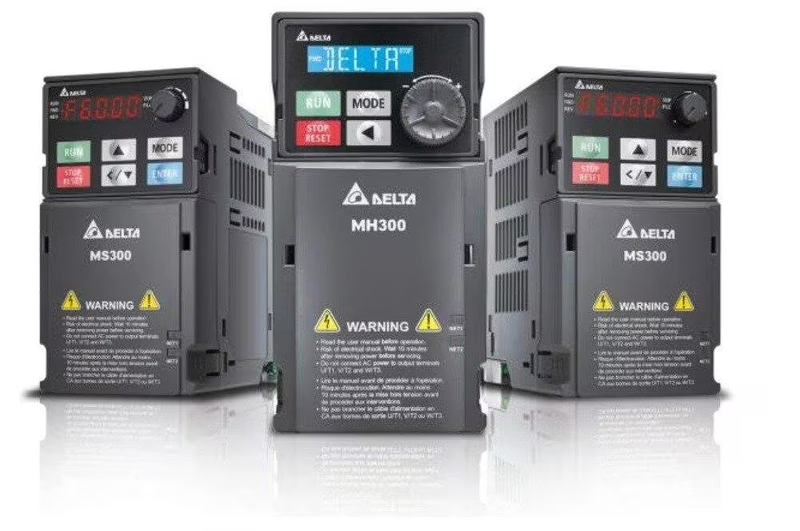
A Variable Frequency Drive controls motor speed by changing the input frequency and voltage. Because of this, it provides smooth acceleration and allows precise speed regulation.
This type of AC drive is widely used where speed needs to change according to process demand. Moreover, it supports automation systems and improves overall machine efficiency.
Key benefits:
- Speed regulation
- Energy saving
- Smooth acceleration
- Reduced motor stress
- Process flexibility
- Better control integration
What is a Soft Starter?
A Soft Starter gradually increases voltage during startup. As a result, the motor starts smoothly without sudden current surge.
Unlike a variable speed drive, this device does not change running speed. However, it protects motors from mechanical shock during startup and stopping.
Common uses:
- Pump systems
- Compressors
- Fans
- Material handling
- Fixed speed applications

Difference Between VFD and Soft Starter
The difference between VFD and Soft Starter mainly depends on speed control and application needs.
| Feature | Variable Speed Drive | Soft Starter |
|---|---|---|
| Speed adjustment | Yes | No |
| Current reduction | Yes | Yes |
| Energy optimization | High | Medium |
| Process control | Better | Limited |
| Initial cost | Higher | Lower |
| Application range | Broad | Basic |
Therefore, industries choose based on whether they need only starting control or full operational control.
What is the Difference Between VFD and Soft Starter in Practical Use?
In practical applications, both devices serve different purposes.
If machinery requires speed changes, automation integration, and process flexibility, an AC drive is preferred. On the other hand, if only smooth startup is required, the second option works well.
Use a variable frequency drive when:
- Speed must vary
- Energy saving is important
- Load changes often
- Process automation is required
- Frequent starts occur
Use a soft start controller when:
- Speed remains fixed
- Budget is limited
- Simple startup required
- Basic motor protection needed
Advantages of VFD Over Soft Starter
Many industrial users prefer variable frequency drives because they provide greater control.
VFD reduces energy usage by matching motor speed to actual demand. This is especially useful in pumps and fans.
Production systems often require speed changes. VFD supports this efficiently.
Controlled acceleration reduces wear on belts, bearings, and couplings.
VFD improves machine performance and process consistency.
VFD easily integrates with PLC, HMI, and SCADA systems.
When to Use Soft Starter?
Soft Starter is ideal when the goal is only to reduce startup shock.
Applications include:
- Water pumps
- Air compressors
- Blowers
- Heavy duty induction motors
- Basic industrial motor control
Soft Starter works well where variable speed is not required.
For Pump Motor?
This is a common industrial question.
For constant flow systems, Soft Starter may work. However, for variable flow or pressure systems, VFD is more efficient because it adjusts motor speed according to process demand.
For water treatment, STP, RO plants, and irrigation systems, VFD is generally preferred.
For Conveyor?
Conveyors with varying production speed, VFD is recommended. It provides flexible speed control and smoother operation.
Soft Starter is suitable only when conveyor runs at fixed speed continuously.
Cost Comparison: VFD vs Soft Starter
Soft Starter usually costs less initially. However, VFD often provides long-term savings through reduced electricity bills and lower maintenance.
Therefore, while Soft Starter has lower upfront cost, VFD offers better ROI in many applications.
Which One Should You Choose?
Select according to application:
Choose Variable frequency Drive if:
- Process needs speed control
- Energy efficiency matters
- Load varies
- Automation required
- Long-term savings important
Choose Soft Starter if:
- Only smooth starting required
- Fixed speed motor
- Budget is limited
- Basic motor protection needed
VFD dealer in Greater Noida
If you are looking for a reliable VFD dealer in Greater Noida or Soft Starter supplier in Delhi NCR, United Control Engineers offers complete motor control solutions.
We supply:
- Delta Electronics AC Drive
- Schneider Electric VFD
- Soft Starters
- PLC
- HMI
- Servo
- Automation Panels
We ensure quick delivery in industrial zones like Kasna, Surajpur, Ecotech and Toy City.
Final Conclusion
The answer to VFD vs Soft Starter depends on your application. Both devices have specific roles in industrial motor control.
If you need speed control, automation, and energy efficiency, Variable frequency drive is the right solution. If your goal is only soft motor starting at lower cost, Soft Starter is suitable.
For technical selection support, fast supply, or industrial automation consultation in Greater Noida and Delhi NCR, connect with United Control Engineers.
Email: marketing@unitedcontrolengg.com
Website: www.unitedcontrolengg.com